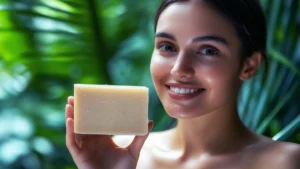

Selecting soap making materials for sensitive skin requires checking the ingredients that each material adds to the finished bar. Because skin can react to specific substances, ingredient lists help you see what each material adds to the soap. Fragrance oils affect scent, while colorants, botanicals, seeds, and additives affect color or texture. Here is how to select soap making supplies for sensitive skin:
Compare Soap Bases
A soap base is a prepared soap mixture that forms the starting material for a finished bar. Its ingredients influence the bar’s cleansing properties, texture, hardness, and feel on the skin. Melt-and-pour bases contain prepared soap ingredients that vary by formula. Such ingredients include goat milk, shea butter, oatmeal, aloe vera, and cocoa butter. Goat milk bases are formulated for a creamy texture, while shea butter bases incorporate shea butter with oils and glycerin. Oatmeal soap bases contain ground oatmeal, which adds texture to the finished bar. Checking the ingredient list shows what the base already contains, helping identify soap making supplies that fit sensitive-skin soap.
Review Fragrance Oils
Fragrance oils add scent to soap, but their ingredients and formulation characteristics vary. Some fragrance oils are formulated for melt-and-pour soap, while others are suitable for cold-process or hot-process soapmaking. Checking fragrance details, including whether a formula is phthalate-free or paraben-free, provides information for comparing products.
Phthalates are a group of chemicals used in some fragrance formulations, while parabens are preservatives used in some personal-care products. Some products are free from phthalates, parabens, sodium lauryl sulfate (SLS), and sodium laureth sulfate (SLES). Such ingredients can contribute to skin irritation in people who react to specific cosmetic ingredients. Reviewing each fragrance’s ingredients and listed formulation characteristics helps narrow options when selecting a fragrance for sensitive-skin soap.
Assess Botanicals and Seeds
Botanicals add visual detail and texture to soap, including lavender flowers, rose petals, and orange slices. Seeds also add exfoliating properties to handmade soap. A few types of seeds to include in your soaps include:
- Chia seeds
- Milk thistle seeds
- Sesame seeds
- Fennel seeds
- Cardamom seeds
- Caraway seeds
Sensitive-skin formulations require attention to the physical texture that added materials create in the bar. Coarse or abrasive particles produce more friction against the skin, which can cause discomfort or irritation for people with sensitive skin; finer materials provide texture with less physical abrasion during use. Selecting the appropriate particle size and quantity helps control how the finished soap feels against the skin.
Review Soap Additives
Soap additives are materials added to a soap base to change the texture or other properties of the finished bar. Colloidal oatmeal has a fine texture, while luffa provides a coarser physical scrub. The type and amount of an exfoliating additive affect how much friction the bar creates during use. For sensitive skin, selecting a less abrasive additive helps limit physical irritation.
Purchase Soap Making Supplies
Selecting soap making supplies for sensitive skin starts with comparing ingredients and product characteristics. This approach helps identify what each material adds and how those additions affect the finished soap. Sourcing these materials from a dedicated soap supplier provides access to quality products for different formulation needs. Find soap making supplies for sensitive skin from an apothecary shop today.