

The Washington Commanders vs Philadelphia Eagles match player stats are always a major point of discussion for NFL fans, analysts, and fantasy football players. As long-standing NFC East rivals, every matchup between these two teams brings intensity, physical play, and meaningful individual performances. Player statistics from this game help explain not only who won, but how the game was controlled, where momentum shifted, and which players truly made the difference. This SEO-optimized, user-friendly article delivers a complete, easy-English breakdown of player stats, unit performances, and key takeaways from the Commanders vs Eagles matchup.
Game Overview: Commanders vs Eagles
This matchup featured a mix of aggressive offense, disciplined defense, and strategic coaching decisions.
Why This Matchup Is Important
- NFC East divisional rivalry
- Playoff positioning implications
- Fantasy football relevance
- Player development evaluation
- Coaching strategy comparison
The final score tells one story, but the player stats reveal the full picture.
Quarterback Performance Comparison
Quarterback play heavily influenced the flow and outcome of the game.
Washington Commanders Quarterback Stats
The Commanders’ quarterback focused on efficiency and ball safety.
Passing Performance
- Steady completion percentage showing controlled decision-making
- Passing yards gained mostly through short and medium routes
- Touchdown passes coming from structured red-zone plays
- Limited interceptions but noticeable pressure from the Eagles’ defense
- Multiple sacks taken due to pocket collapse
Game Impact
The Commanders quarterback managed the game well at times but struggled to create explosive plays under pressure.
Philadelphia Eagles Quarterback Stats
The Eagles’ quarterback delivered a strong all-around performance.
Passing and Rushing Output
- High completion rate with confident throws
- Strong passing yard total, including deep completions
- Rushing yards added through designed runs and scrambles
- Multiple total touchdowns showcasing leadership
- Low turnover rate helping maintain momentum
Game Impact
The Eagles quarterback’s dual-threat ability forced the Commanders defense to adjust constantly.
Running Back Player Stats
The running game played a critical role in controlling tempo.
Washington Commanders Rushing Stats
Washington used a shared running back approach.
Rushing Breakdown
- Moderate rushing attempts maintaining balance
- Average yards per carry showing consistency
- Short-yardage conversions keeping drives alive
- Limited explosive runs due to strong defensive containment
The Commanders’ run game supported possession but lacked big-play impact.
Philadelphia Eagles Rushing Stats
Philadelphia’s rushing attack was one of the game’s strongest elements.
Key Rushing Numbers
- High total rushing yards controlling field position
- Strong yards after contact reflecting physical dominance
- Goal-line rushing touchdowns converting scoring chances
- Quarterback runs adding unpredictability
The Eagles’ ground game consistently wore down the Commanders’ defense.
Wide Receiver and Tight End Stats
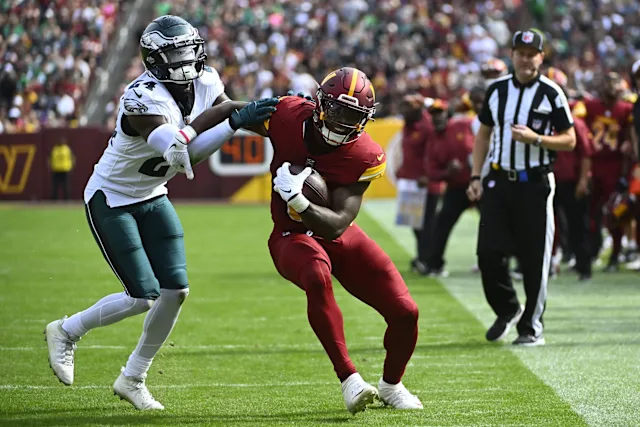
Receiving performance shaped scoring opportunities and third-down success.
Washington Commanders Receiving Stats
The Commanders’ receivers focused on reliability.
Receiving Highlights
- Receptions spread across multiple targets
- Moderate receiving yard totals through quick routes
- Important third-down catches extending drives
- Red-zone receptions contributing to scores
- Limited deep passing success
Receivers performed efficiently but struggled to stretch the field.
Philadelphia Eagles Receiving Stats
The Eagles showcased depth and versatility.
Receiving Breakdown
- Multiple receivers with strong yardage totals
- Successful deep routes opening the offense
- Tight ends controlling the middle of the field
- High yards after catch creating explosive plays
- Touchdown catches from multiple positions
This balanced receiving effort made the Eagles offense difficult to defend.
Offensive Line Performance
Offensive line play strongly influenced both passing and rushing success.
Commanders Offensive Line Stats
Protection and Blocking
- Sacks allowed due to constant pressure
- Quarterback hits affecting timing
- Run blocking created some lanes but lacked consistency
- Difficulty handling aggressive pass rush schemes
Eagles Offensive Line Stats
Blocking Dominance
- Minimal sacks allowed
- Excellent pocket protection
- Wide rushing lanes opened consistently
- Strong communication against blitzes
The Eagles’ offensive line gave their skill players a major advantage.
Defensive Player Stats
Defense created momentum shifts and key stops.
Washington Commanders Defensive Stats
The Commanders defense emphasized effort and discipline.
Defensive Highlights
- High tackle totals across all levels
- Tackles for loss disrupting early downs
- Sacks generating pressure
- Pass breakups limiting some big plays
- Forced turnovers creating opportunities
Despite strong effort, the defense spent too much time on the field.
Philadelphia Eagles Defensive Stats
The Eagles defense applied relentless pressure.
Defensive Strengths
- High sack numbers disrupting rhythm
- Consistent quarterback pressures
- Interceptions changing momentum
- Strong red-zone defense limiting scoring
Their defensive pressure was a major factor in the outcome.
Linebacker and Secondary Performance
Coverage and run support played key roles.
Commanders Linebackers and Secondary
Performance Summary
- Solid tackling efficiency
- Effective zone coverage in stretches
- Third-down stops at key moments
- Occasional breakdowns against mobile quarterback plays
Eagles Linebackers and Secondary
Impact Plays
- Aggressive coverage assignments
- Interceptions and pass deflections
- Effective blitz timing
- Strong containment on outside runs
The Eagles secondary limited explosive mistakes while staying aggressive.
Special Teams Player Stats
Special teams influenced field position and momentum.
Washington Commanders Special Teams
Key Metrics
- Reliable field goal accuracy
- Solid punt distance and hang time
- Kick returns providing average starting field position
Philadelphia Eagles Special Teams
Special Teams Efficiency
- Consistent kicking performance
- Strong punt coverage limiting returns
- Occasional explosive returns creating short fields
Team Stat Comparison
Comparing team stats shows how the game was controlled.
Total Offensive Yards
- Eagles produced higher total yardage
- Commanders relied on longer, controlled drives
Time of Possession
- Eagles maintained possession through sustained drives
- Commanders stayed competitive but had fewer opportunities
Third-Down Efficiency
- Eagles converted at a higher rate
- Commanders struggled in key situations
Turnover Margin
- Eagles protected the football better
- Commanders turnovers affected momentum
Fantasy Football Impact
This matchup had major fantasy implications.
Commanders Fantasy Performers
Fantasy Value
- Receivers with steady reception totals
- Running backs providing consistent touches
- Quarterback offering moderate fantasy output
Eagles Fantasy Standouts
Fantasy Highlights
- Quarterback delivering elite dual-threat points
- Running backs scoring rushing touchdowns
- Receivers producing high-yardage games
Coaching Strategy Reflected in Stats
Statistics often reflect coaching decisions.
Commanders Coaching Approach
Key Decisions
- Conservative play-calling early
- Defensive adjustments in the second half
- Emphasis on ball control
Eagles Coaching Approach
Winning Strategy
- Aggressive offensive tempo
- Balanced run-pass mix
- Defensive pressure packages
What the Player Stats Reveal
Numbers provide deeper insight than highlights.
Commanders Key Takeaways
- Offensive explosiveness needs improvement
- Defensive effort remains a strength
- Red-zone efficiency must increase
Eagles Key Takeaways
- Offensive versatility is elite
- Defensive pressure controls games
- Depth supports consistent performance
Season Impact of This Match
Divisional games shape long-term outcomes.
Washington Commanders Outlook
- Continued development of offensive units
- Defensive foundation remains competitive
- Focus on reducing mistakes
Philadelphia Eagles Outlook
- Strong position in the NFC East
- Balanced roster capable of deep playoff run
- Continued emphasis on discipline and execution
Why Fans Analyze Match Player Stats
Fans use stats to:
- Understand game flow
- Evaluate player performance
- Make fantasy decisions
- Track team progress
Conclusion
The Washington Commanders vs Philadelphia Eagles match player stats clearly show a game decided by efficiency, pressure, and execution. While the Commanders displayed resilience through defensive effort and controlled offense, the Eagles capitalized on explosive plays, quarterback versatility, and dominant line play. From quarterback production and rushing efficiency to defensive pressure and special teams consistency, the statistics explain why the Eagles gained the upper hand. This matchup provided valuable insights into both teams as the season continues.